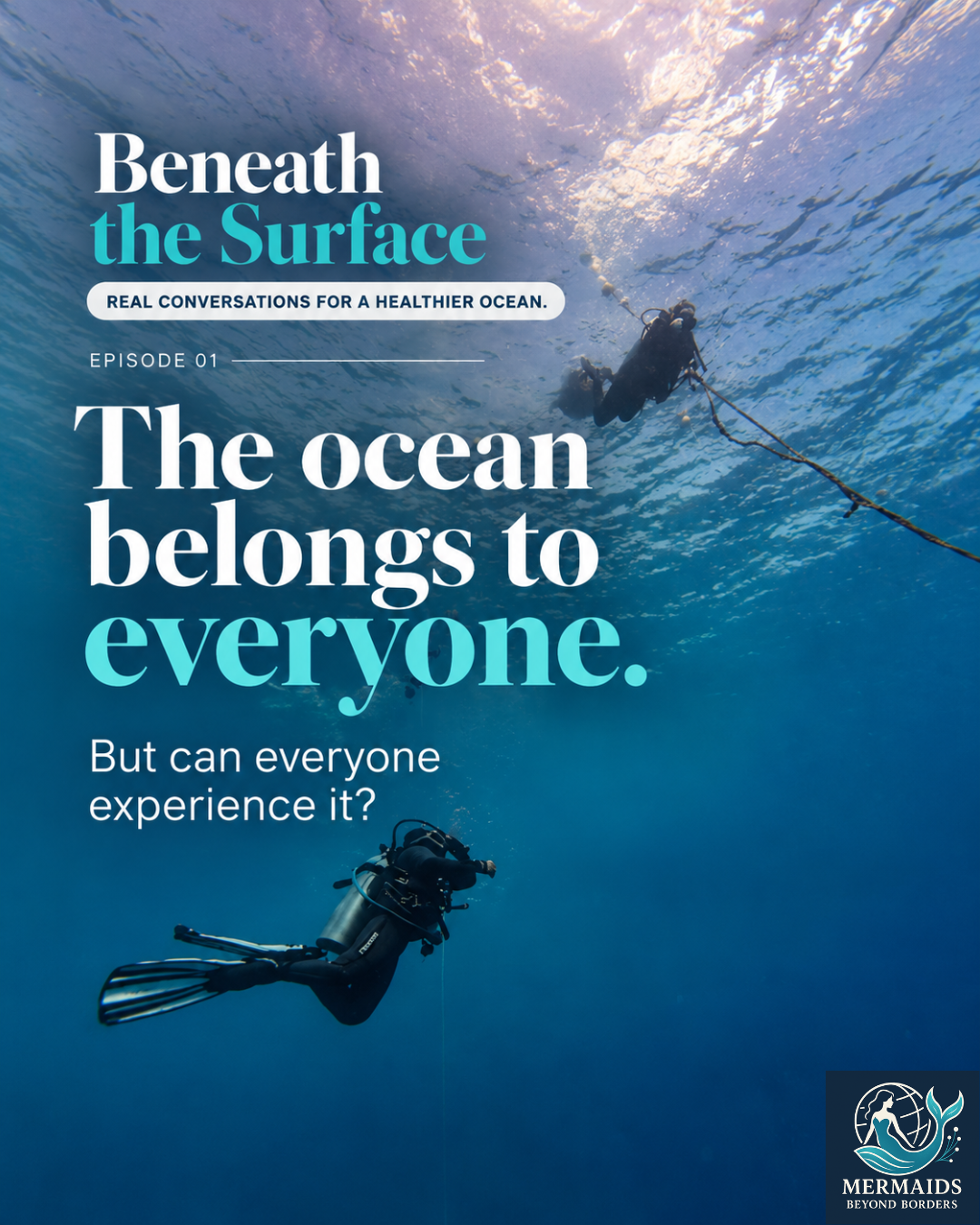
Episode 1: The ocean belongs to everyone.
Real conversations for a healthier ocean.
Slide 1 of 6
What this episode says
The ocean belongs to everyone.
But can everyone experience it?
Access isn’t always equal.
Many people face barriers that make it difficult to experience, learn about or work in the ocean.
- Physical barriers
- Inaccessible infrastructure, lack of adaptive equipment and limited support can make it difficult for disabled people to take part in marine activities.
- Financial barriers
- The costs of travel, equipment, training and fieldwork can be prohibitive, especially for people from lower-income backgrounds.
- Social barriers
- A lack of representation, confidence, inclusive environments and access to networks can make the ocean feel unwelcoming for people from marginalised communities.
Accessibility goes beyond the shoreline.
Experiencing the ocean can involve more than just visiting the beach. There are barriers at every stage, from getting there to taking part, learning and building a career.
- Getting there
- Transport, coastal infrastructure and physical access can make it difficult for some people to reach the coast or board boats.
- Taking part
- Activities such as diving, snorkelling, sailing and fieldwork often require specialised equipment, training and environments that are not always accessible.
- Learning
- Marine education can be limited by costs, inaccessible facilities, lack of assistive technology and a lack of representation in learning spaces and course materials.
- Building a career
- Internships, fieldwork and early-career opportunities are often unpaid, physically demanding or based in remote locations, creating additional barriers for people from marginalised communities.
Inclusion isn’t just an invitation.
True inclusion means removing the barriers that stop people from accessing, learning and participating in the ocean — not just welcoming them in, but ensuring they can fully take part.
- Physical access
- From adaptive equipment to accessible facilities, removing physical barriers helps more people get in, explore and enjoy the ocean.
- Social inclusion
- Creating a welcoming, supportive and representative environment helps people from all backgrounds feel they belong in marine spaces.
- Mental wellbeing
- The ocean can be healing. Accessible spaces allow everyone to experience the benefits of the blue for their mental and emotional health.
- Educational access
- Accessible marine education ensures that all learners — regardless of ability, background or neurodiversity — can discover, learn and be inspired by the ocean.
A more inclusive ocean is a stronger ocean.
A more inclusive ocean is possible.
By removing barriers and creating opportunities, we can make the ocean more accessible so that everyone can experience, learn from and help protect it.
- Representation matters
- Seeing diverse role models in marine spaces helps more people feel that the ocean is for them too.
- Accessible education
- Inclusive teaching, adapted resources and multiple ways to learn can open up marine science to more people.
- Inclusive spaces
- Accessible facilities, adapted equipment and thoughtful design make it easier for everyone to take part safely and confidently.
- Stronger ocean solutions
- A more inclusive ocean community brings new perspectives, stronger collaboration and fairer, more effective conservation actions.
Real change starts with action.
A more inclusive ocean is possible, but it requires commitment, collaboration and long-term solutions. Here are some of the ways we can make a difference:
- Listen and include
- Involve disabled people and other marginalised communities in decision-making, so solutions reflect real experiences and needs.
- Improve access
- Invest in accessible infrastructure, equipment and transport, and make marine education and training more inclusive and affordable.
- Build community
- Create safe, inclusive spaces in marine industries, from diving and fieldwork to research and conservation, where everyone feels welcome and supported.
- Commit to long-term change
- Develop inclusive policies, increase funding, challenge barriers and keep accessibility at the centre of ocean conservation, education and industry.
What would make the ocean more accessible to you?
Sources & Further Reading
- British Sub-Aqua Club (BSAC) — Welcoming disabled people into our scuba and snorkelling community (opens in a new tab)
- BSAC — Diving for All Programme (opens in a new tab)
- UNESCO-IOC — Ocean Literacy With All (opens in a new tab)
- UNESCO-IOC (2025) — Promoting Ocean Literacy: An Education Policy Brief (opens in a new tab)