
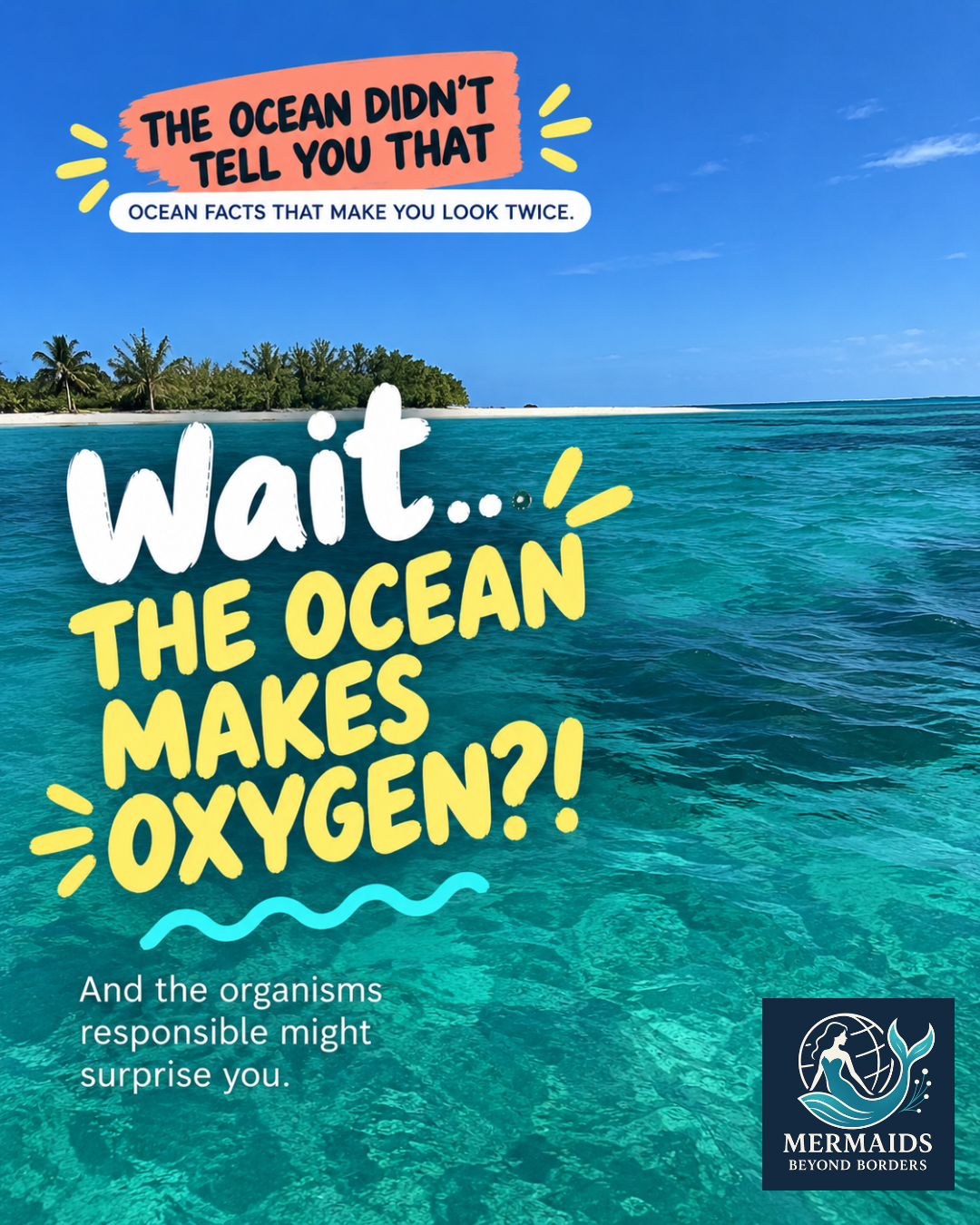
Episode 1: Wait… the ocean makes oxygen?!
Five slides. Use the previous and next buttons to move through them.
Slide 1 of 5
What this episode says
The ocean makes oxygen, and the organisms responsible might surprise you. Scientists estimate that roughly half of Earth’s oxygen production comes from the ocean.
Tiny drifting organisms called phytoplankton use sunlight to photosynthesise, releasing oxygen into the water.
Marine organisms like plankton, fish and larger animals use oxygen too. Much of the oxygen produced in the ocean is also consumed by marine life, balancing the system and keeping the ocean healthy.
Small organisms. Huge impact. The ocean’s tiniest inhabitants help support life on Earth. Well, now you know.
About this episode
When we think about where Earth’s oxygen comes from, we often picture forests, trees and green landscapes. But some of the ocean’s most important oxygen producers are so small they can only be seen with a microscope.
Phytoplankton are tiny drifting organisms that use sunlight to photosynthesise. They release oxygen and help support marine food webs. Scientists estimate that roughly half of Earth’s oxygen production comes from the ocean.
That does not mean that half the oxygen we breathe today comes directly from the ocean’s current oxygen production. Much of the oxygen produced in the ocean is also consumed there by marine organisms and other natural processes. The oxygen in our atmosphere has accumulated over millions of years.
The ocean plays an extraordinary role in Earth’s oxygen cycle, and the science is more complex than saying it provides half the air we breathe. Sometimes the smallest organisms make a huge difference.